
When buying woven bags for agricultural products, one of the first questions buyers usually ask is simple: How much weight can the bag hold?The answer depends on more than the material alone. Bag size, fabric strength, construction, filling method, and the type of product being packed can all affect the actual load capacity.
Agricultural woven bags made from polypropylene (PP) are widely used for rice, grain, corn, potatoes, onions, animal feed, seeds, and other bulk products. Different bags can be produced for different weight ranges, so the right specification depends on how the bag will actually be used.
Typical Weight Capacity of Agricultural Woven Bags
There is no single standard load capacity for every agricultural woven bag. Smaller bags designed for seeds or other lightweight products may hold around 5–10 kg, while larger bags for grain, feed, or similar products can commonly hold 25 kg, 40 kg, or 50 kg.
For heavier applications, the bag can be made with stronger fabric and reinforced stitching. However, the normal filling weight should not be confused with the maximum breaking load. A bag designed for 50 kg under normal handling conditions should not automatically be filled beyond that weight simply because the fabric can withstand a higher force during testing.
What Affects the Load Capacity?
1. Fabric Strength
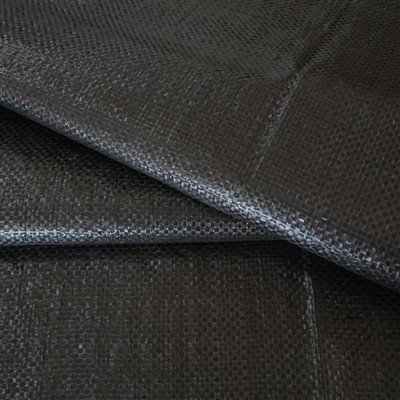
The woven fabric is one of the main factors affecting how much weight a bag can carry. PP tapes are woven together to form the bag body, and their thickness, width, and weaving density influence the strength of the finished fabric.
Heavier products generally require a stronger fabric specification. Using a thinner fabric for a heavy load may increase the risk of stretching, seam damage, or tearing during transportation.
2. Bag Size
A larger bag does not automatically have a higher load capacity. If the dimensions increase without a corresponding change in fabric strength or construction, the bag may experience more stress when filled.
The bag dimensions should therefore be selected according to both the weight and volume of the product. This is particularly important for products with different bulk densities.
3. Stitching and Seams
The fabric may be strong, but weak stitching can still become the point where a bag fails. The bottom seam and side seams carry considerable stress when a filled bag is lifted or moved.
For bags used to pack 25–50 kg of grain, feed, or other bulk agricultural products, the stitching method needs to match the intended load.
4. Product Density
Different agricultural products occupy different amounts of space at the same weight. For example, 25 kg of grain and 25 kg of seeds may require different bag dimensions because their bulk densities are not necessarily the same.
This means the target weight alone is not enough when selecting a bag. The type of agricultural product also needs to be considered.

What Affects the Load Capacity?
PP lamination is mainly used to improve moisture resistance and reduce the leakage of fine particles. It does not automatically make a woven bag suitable for a heavier load.
If a bag needs to carry more weight, the fabric specification, stitching, and overall construction should be considered together. Lamination is more related to protection and containment than to load-bearing strength.
How Should Buyers Choose the Right Bag?
The required bag specification depends mainly on the weight and type of agricultural product being packed. A bag for 50 kg of grain may need a different construction from a 25 kg bag used for seeds or vegetables, even when both are made from PP woven fabric.
For heavier loads, fabric strength and stitching should be considered together. The bag dimensions also need to match the product volume so that the filled bag can be handled without placing excessive stress on the seams or bottom.
In practice, the most suitable agricultural woven bag is not simply the largest or thickest option. It should match the actual product weight, packing conditions, and handling method.