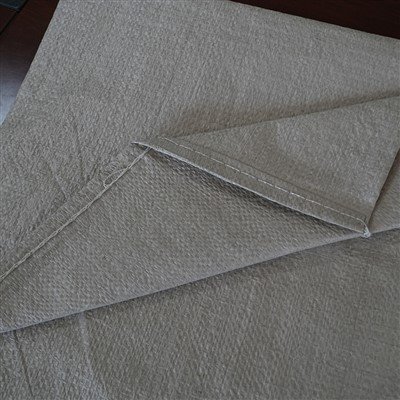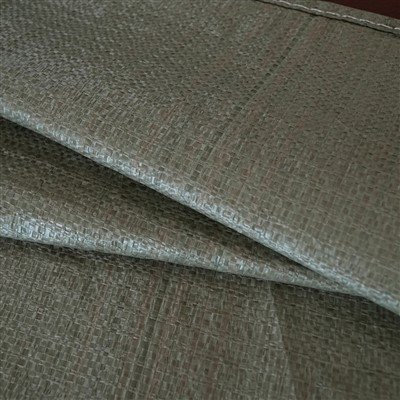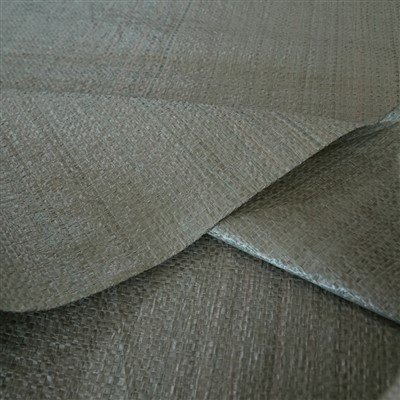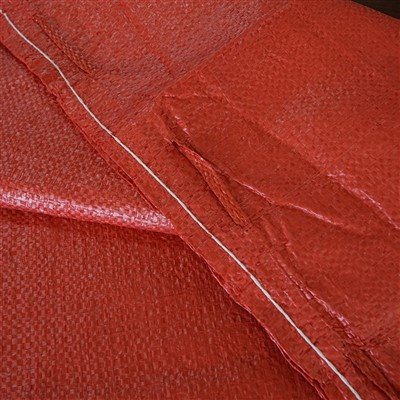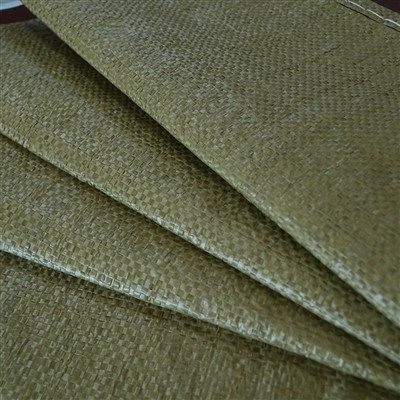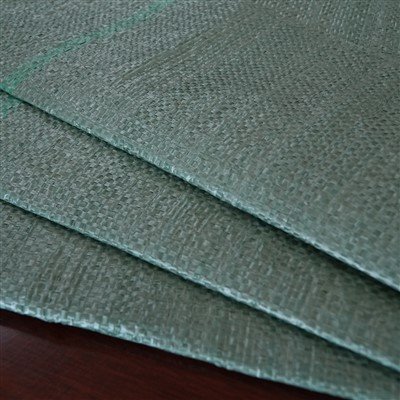

Due to their interlaced warp-and-weft structure, PP woven bags inherently possess small gaps, resulting in limited basic sealing performance and high air permeability. Without additional processing, standard PP woven bags cannot fully block the ingress of moisture, air, or dust; consequently, they are best suited for packaging dry bulk materials that do not require a high degree of airtightness.
To enhance sealing performance, functional modifications are often applied during production-such as laminating the woven fabric with a layer of polypropylene or polyethylene film. This lamination effectively fills the fabric's interstices, significantly reducing air and moisture permeability while improving overall moisture and water resistance. Another common method involves inserting a PE liner bag; this dual-layer structure further boosts sealing efficacy, making it ideal for powdered or granular materials that require strict storage conditions.
Sealing performance is also closely linked to the closure method employed. Techniques such as stitching, heat sealing, or self-sealing valve designs directly impact the final seal integrity. Insufficient stitch density or an imperfect seal can lead to material leakage or moisture ingress. Therefore, in practical applications, selecting the appropriate bag structure and sealing method based on material characteristics, storage environments, and transportation conditions is essential to ensuring the overall reliability of the packaging system's seal.